AROUND TOWN/MUSIC: Crunch Time

By Robert D. Thomas
Music Critic
Pasadena Star-News/San Gabriel Valley Tribune/Whittier Daily News
This article was first published today in the above papers.

Every classical music indoor season brings two or three dates when crunches pop up as seemingly every organization decides to schedule an event on that particular day. Summertime has largely escaped these conflicts but this year — specifically Sat., June 29 — will force folks in the San Gabriel Valley to make a choice among three different orchestras.

The California Philharmonic will open its second season at Santa Anita Racetrack in Arcadia on Jan. 29 as Music Director Victor Vener leads his band in a program entitled “Beatles, Beethoven and the Beach Boys.”

On the same date — indeed, at the same time (7:30 p.m.) — a quarter-mile away at the Los Angeles County Arboretum, the Pasadena Pops will be playing its second concert of the season with Broadway star Bernadette Peters as the centerpiece. Larry Blank returns to conduct the orchestra.

Finally, on the same day and time at Caltech’s Beckman Mall in Pasadena, Rachael Worby and her ensemble, Muse-ique, will begin its three-concert summer season with a program that features vocalist Patti Austin.

Pasadena Pops management, which announced its season several weeks ago, said that June 29 was the date chosen by Peters. A spokesperson for Muse-ique said, “Clearly each organization draws different audiences,” which sounds somewhat dubious to me but, hey, what does a lowly music critic know? The Cal Phil noted that each of its five concerts during the summer repeat Sunday afternoon at 2 p.m. indoors at Walt Disney Concert Hall.

Last year the Pops and Cal Phil scheduled their concerts on non-competing weekends but that has changed this year. The two organizations will have programs on July 13. The Pops plays the second of three programs being led by its new principal conductor, Michael Feinstein, this summer, while Cal Phil counters with one of Vener’s favorite programming concepts, “Andrew Lloyd Webber meets Puccini.” On Aug. 10, the Cal Phil’s “Rodgers and Hammerstein and Gershwin” evening will go up against the Pops’ own Beatles-oriented program.

Meanwhile, on July 27, Muse-ique comes up with a program of movie music featuring cellist Matt Haimovitz as soloist, which the Cal Phil offers “Dance Fever.”

One of the potential problems when the Pops and Cal Phil perform on the same night is traffic. Although those attending Cal Phil concerts enter on the northeast side of the park, which is quite a ways from the Arboretum, traffic for both concerts coming from the west exits the 210 Freeway at Baldwin Ave.

Hollywood Bowl has concerts on each of the above weekends but the crossover issue seems less likely based on the Bowl’s programming as none of the Bowl’s programs involves orchestras.

_______________________

(c) Copyright 2013, Robert D. Thomas. All rights reserved. Portions may be quoted with attribution.

(Revised) OVERNIGHT REVIEW: Michael Feinstein debuts as Pasadena Pops conductor

By Robert D. Thomas
Music Critic
Pasadena Star-News/San Gabriel Valley Tribune/Whittier Daily News
______________________

Pasadena Pops Orchestra; Michael Feinstein, conductor
Saturday, Sept. 1, 2013 • Los Angeles County Arboretum
Next performance: June 29
Information: www.pasadenasymphony-pops.org
______________________
Feinstein-White
Michael Feinstein and Lari White perform at last night’s concert by the Pasadena Pops at the Los Angeles County Arboretum. Photo from Pasadena Pops
______________________

Midway through the Pasadena Pops concert last night at the Los Angeles County Arboretum, Michael Feinstein thanked the audience for accompanying him and the orchestra on what he called an “experiment” in pops programming.

The description was spot-on. This was Feinstein’s first concert as the orchestra’s Principal Conductor and his first time conducting a full-sized orchestra. Whatever you thought of his conducting ability, there was no doubting the uniquely fascinating nature of the evening’s program, Of the 19 pieces performed, I can only remember two or three that I had ever heard on an orchestra pops program in my decades of reviewing.

Feinstein played to his numerous strengths. His commentary was, for the most part, erudite and witty and many of the works were pieces he had either exhumed in his archival wanderings or had rarely been played before. Nearly all were from the mid- to late-20th century, an era in which Feinstein has focused in what has become known as the “Great American Songbook.”

As a conductor, Feinstein seemed uncomfortable at times and in his element in others. There were occasional ragged entrances and cutoffs but, for the most part, the orchestra acquitted itself well, especially considering that for many of the players a healthy slice of the program was music they were playing for the first time. Feinstein will undoubtedly get better on the podium; most fledgling conductors cut their teeth on student or community ensembles, not on a stage before several thousand people.

In the first half of the evening vocalist Lari White delivered powerful performances of Jump for Joy and Bewitched, Bothered and Bewildered, both arranged by Nelson Riddle, whose birthday was on June 1. She then concluded with poignant renditions of Where is it Written? and A Piece of the Sky from the movie Yentl.

Marc Cherry proved to be the evening’s comedic highlight with a rollicking performance of Mrs. Worthington by Noel Coward. Cheyenne Jackson delivered over-wrought performances of I Get Along With You Very Well and Don’t Get Around Much Anymore, but was effective in channeling Sam Cooke in A Change is Gonna Come. Jackson noted that Barbara Cook once admonished him to talk less and sing more. He should have heeded her advice.

Feinstein concluded the evening by singing a touching rendition of The Way We Were from the keyboard, a tribute to Marvin Hamlisch, who died last August (which is how Feinstein ended up as the Pops leader). Feinstein’s opening concert offered a great deal of promise for what he will bring in the two other programs he will conduct this summer and, perhaps, into the future.
_______________________

Hemidemisemiquavers:
• The Pops will appear June 9 at the Ford Amphitheatre (in the Cahuenga Pass, across the 101 Freeway from Hollywood Bowl) with vocalist Mandy Patinkin. The performance is part of the inaugural “Zev Yaroslavsky Signature Series” at the Ford (Yaroslavsky’s L.A. County supervisorial district encompasses both the Ford and the Bowl). Info: www.fordtheatres.org
• Last night’s ambience was enhanced greatly by what seemed like hundreds of young volunteers who helped people to their seats and, in particular, provided light on the footpaths leading to the parking lots following the performance.
• Concertmaster Ainme Kreston led a somewhat lugubrious rendition of The Star Spangled Banner from her first-violin chair.
• Feinstein had a lot of fun with the Arboretum’s peacocks, many of whom were in fine voice Saturday night.
• The Pops second concert of the season, on June 29, will center on Broadway star Bernadette Peters. Feinstein will return on July 13 for an evening of music from MGM movies, and will conclude the season on Sept. 7 in an evening of the music of George and Ira Gershwin. In between those two, Martin Herman will lead the orchestra in a program featuring music of the Beatles.
_______________________

(c) Copyright 2013, Robert D. Thomas. All rights reserved. Portions may be quoted with attribution.

AROUND TOWN/MUSIC: Michael Feinstein to debut as Pasadena Pops conductor

By Robert D. Thomas
Music Critic
Pasadena Star-News/San Gabriel Valley Tribune/Whittier Daily News
This article was first published today in the above papers.

Pasadena Pops Orchestra; Michael Feinstein, conductor
Sat., June 1; 7:30 p.m. (gates open at 5:30 p.m.)
Los Angeles County Arboretum and Botanic Center; 301 N. Baldwin Ave., Arcadia
Tickets: $20-$100 (children 14 and under: $10)
Information: www.pasadenasymphony-pops.org
_____________________
Feinstein_5-26-13There’s a lot riding on Saturday night’s concert by the Pasadena Pops Orchestra at the Los Angeles County Aboretum and Botanical Center. It’s the first of five concerts this summer at the Arcadia facility and marks the debut of Michael Feinstein as the Pops’ Principal Conductor.

Feinstein stepped into the role when Marvin Hamlisch died unexpectedly last August. Feinstein is artistic director of the Palladium Center for the Performing Arts in Carmel, Indiana, and since 2010 has been director of the Jazz and Popular Song Series at New York City’s Jazz at Lincoln Center.

However, neither of these positions requires him to conduct an orchestra. Although Feinstein has performed with many orchestras throughout the past two decades, this will be his first time in a conductor role. Thus, even though he is a major draw, choosing him to head the Pops ensemble represents a big gamble for the orchestra’s management.

In Saturday’s concert Feinstein will lead with his strength as the program is entitled “Michael Feinstein’s Songbook.” During the past decade, the 56-year-old Columbus, Ohio native has not only performed many songs from what he calls “The Great American Songbook” but has also been instrumental (no pun intended) in preserving legendary music from the early to mid-20th century. To accomplish this, he has used educational programs, Master Classes and, in particular, his Michael Feinstein Great American Songbook Initiative. He also serves on the Library of Congress’ National Recording Preservation Board.

Saturday’s program will include music by Rodgers and Hart, Leonard Bernstein, Leroy Anderson, and Ferde Grofé. Feinstein will also offer a musical tribute to Hamlisch, a legendary composer of Broadway and motion picture scores who was 68 when he died last August. Cheyenne Jackson will be the guest artist for the evening.

Feinstein will lead two other programs during the summer, including music from MGM movies on July 13, and an evening devoted to the music of George and Ira Gershwin to close the season on Sept. 7.

Broadway star Bernadette Peters will be the headliner on June 29 in an evening conducted by Larry Blank and the August 10 concert will focus on music of the Beatles, led by Martin Herman.

This summer marks the second season for the Pops at the Arboretum, following nearly 20 years at Descanso Gardens and two seasons on the lawn outside the Rose Bowl.
_______________________

(c) Copyright 2013, Robert D. Thomas. All rights reserved. Portions may be quoted with attribution.

AROUND TOWN/MUSIC: Choral music takes center stage

By Robert D. Thomas
Music Critic
Pasadena Star-News/San Gabriel Valley Tribune/Whittier Daily News
This article was first published today in the above papers.

The combination of Christian Holy Week and Jewish Passover usually brings a number of major choral concerts and this year is no different except for the fact that the Los Angeles Master Chorale (which would normally have a concert during this time frame) is in Europe touring John Adams’ The Gospel According to the Other Mary with the Los Angeles Philharmonic.

On the local front:

• Jeffrey Bernstein will lead his Pasadena Master Chorale in a performance Rachmaninoff’s All Night Vigil this afternoon at 4 p.m. at Altadena Community Church. Fortunately, the work does not last all night (the 15-movement work lasts just over an hour). The name comes from the Russian chants that occur during the all-night liturgy of the Russian Orthodox Church. Information: 626-208-0009; www.pasadenamasterchorale.org

Pasadena Presbyterian Church’s 16th annual Good Friday concert focuses on music influenced by Gregorian chant: Maurice Duruflé’s Requiem, Four Motets on Gregorian Themes and Meditation for solo organ, along with Paul Creston’s Gregorian Chant for String Orchestra. Timothy Howard will conduct the Kirk Choir, community singers, soprano Judith Siirila, baritone Michal Dawson Connor, organist Meaghan King, and the Friends of Music Orchestra. The concert is free, take place Friday at 7:30 p.m. and I’m giving a preconcert lecture at 7 p.m. Information: 818/209-4635; www.ppcmusic.org

• The centerpiece of the 76th Whittier Bach Festival will take place on April 6 at 4 p.m. at Whittier College’s Ruth B. Shannon Center for the Performing Arts when Chorale Bel Canto sings two Bach settings of the Song of Mary: Magnificat in D Major and Cantata BWV 10, Meine selle ehebt den Herrn. Stephen Gothold will conduct the Chorale and Corey Carleton, soprano; Laura Harrison, mezzo-soprano; Daniel Babcock, tenor; and Chung Uk Lee, bass. Information: 888-460-9222; www.choralebelcanto.org

• Stephen Grimm will conduct his Pasadena Pro Musica as it offers a concert of motets by Bach, Brahms, Heinrich Schütz and Henryk Gorecki on Easter Sunday at 4 p.m. at Pasadena Neighborhood Church. Information: 626/628-2144; www.pasadenapromusica.org
_______________________

(c) Copyright 2013, Robert D. Thomas. All rights reserved. Portions may be quoted with attribution.

PREVIEW: LA Opera’s production of Rossini’s “Cinderella” begins tomorrow night

Los Angeles Opera’s production of Rossini’s Cinderella
Opening night: Saturday, March 23 at 7:30 p.m.
Dorothy Chandler Pavilion, 135 N. Grand Ave., Downtown Los Angeles
Other performances: March 28, April 3 and April 13 at 7:30 p.m., March 31 at 4 p.m. April 7 at 2 p.m. (Best seating availability: March 23 and 28)
Preconcert lecture by James Conlon one hour before each performance.
Tickets: $19-$287
Information: 213/972-7812; www.laopera.com

Kate Lindsey and her “magic rats” will be part of the joy infused in LA Opera’s production of Rossini’s Cinderella, which will open tomorrow night at the Dorothy Chandler Pavilion. Photo by Robert Millard.
______________________

By Robert D. Thomas
Music Critic
Pasadena Star-News/San Gabriel Valley Tribune/Whittier Daily News

This article was first published today in the above papers and in other LANG Papers.

The eyes of Kate Lindsey, the beautiful, young, American-born mezzo-soprano, sparkle at the question of whether as a child she wanted to be Cinderella. “What girl doesn’t dream of capturing a prince and living happily ever after?” she laughs heartily.

Beginning Saturday night at the Dorothy Chandler Pavilion, Lindsey gets her chance as she plays the lead role in Rossini’s Cinderella (or, more properly, La Cenerentola, since the performances will be sung in Italian with projected English supertitles). This time around, LA Opera is using a co-production from Houston Grand Opera and Gran Teatre del Liceu of Barcelona, directed by Spaniard Joan Font in his LAO debut. LAO Music Director James Conlon will conduct.

Lindsey is performing the role of Angelina (the name assigned by librettist Jacopo Ferretti to Cinderella) for the first three performances. Georgian soprano Ketevan Kemoklidze takes over after Lindsey departs to the Glyndebourne Festival in England where she will perform the role of the Composer in Richard Strauss’ Ariadne auf Naxos.

That’s the sort of hectic, nomadic life the 31-year-old Lindsey has been leading since she “graduated” from the Metropolitan Opera’s Lindemann Young Artist Development Program six years ago. Her meteoric rise has landed her roles in well-known houses worldwide, including the Met, Royal Opera Covent Garden, the Aix-en-Provence festival in France, San Francisco Opera, Santa Fe Opera and Seattle Opera, where the created the title role in Daron Hagen’s Ameila. Her LAO debut came two years ago as Zaida in another Rossini opera, The Turk in Italy.

“That’s the way you build a career,” says Lindsey. “One step at a time, one building block at a time. Some of the roles are the kind of ‘hands-down-yes’ parts that you won’t turn down. For others, it’s a matter of the team with whom you’ll be working, the size of the house, and other things that factor into the decision.”

Saturday will be Lindsey’s first professional performance of Angelina, although she did play the role in a student production in 2005 at the Wolf Trapp Festival outside of Washington, D.C. “One thing that’s great is that I’m actually getting to play a girl,” she says with a chuckle. “So many of my parts have been ‘trouser roles’ “ [a male character sung by a female; the Composer in Ariadne is one example].

“Angelina is a hard character to portray,” she continues. “She’s the one normal character in the opera, the most morally centered person in a sea of insanity that surrounds her.”

Rossini was just 25 when wrote Cinderella in a mere three weeks, a year after he composed The Barber of Seville. Although not universally acclaimed at its Rome debut, Cinderella has since been established as one of the composer’s finest works. LA Opera created a sparkling production in 2000.

When Rossini operas work well, says Lindsey, they do so because the entire creative team is meshing well. “This isn’t grand opera, like Wagner,” she explains. “It’s rapid-fire comedy with split-second interactions. Every person on the team is important and the relationships we build during rehearsals are critical. Fortunately this production has been seen eight times around the world so that gives all us performing a real comfort level.”

The cast includes René Barbera as Prince Ramiro, Vito Priante as Dandini, Allesandro Corbelli, as Don Magnifico (the wicked stepfather) and Nicola Ulvieri as Alidoro — all in their company debuts — along with LAO “veterans” Stacey Tappan as Clorinda and Ronnita Nicole Miller as Tisbe.

Don’t forget the rats, says Lindsey. The cast includes dancers who perform the role of rodents. “I call them my ‘magic rats,’ “ she says fondly. “They are so cute!”

Having sung all around the world, both in operas and as a soloist with orchestras, Lindsey has had to learn to adapt to performance venues. One of her challenges in Cinderella is the Dorothy Chandler Pavilion, which wasn’t designed primarily as an opera house when it opened nearly half a century ago. “When you sing at the Pavilion,” explains Lindsey, “you’re almost always facing forward so your voice can project throughout the house. Fortunately James [Conlon] is very aware of vocal balances, which is a great asset to a singer. He makes us all sound great.”

Lindsey learned as a youngster about musical teamwork. Her father is a retired Presbyterian pastor and she grew up singing in church choirs (“Children’s choirs, high school choir, bell choir — you name it and I was in it,” she recalls). When she returned home from Indiana University for breaks, she would drop in and sing with the choir — as an alto. She went on to receive a Bachelor of Music degree with distinction from IU before embarking on a professional career.

Now she’s flying around the world as she scales operatic mountains. Along the way, she even found her Prince Charming, marring Seattle optometrist Dr. Landon Jones in August 2011. They pick and choose their spots carefully when they can spend time together. “I’ll be at Glyndebourne for two months,” she says, “and he’ll come in when I have a five-day break. I don’t want him to see me in my ‘performance mode.’ “
_______________________
Hemidemisemiquavers:
• James Conlon article in the printed program discusses his re-kindled love affair with bel canto opera, of which Rossini’s Cinderella is but one example. Read it HERE.
• Tim Page, professor musicology and journalism at the USC Thornton School of Music, who won a Pulitzer Prize for music criticism in 1997, offers his take on Cinderella in a Los Angeles Times article HERE.
_______________________

(c) Copyright 2013, Robert D. Thomas. All rights reserved. Portions may be quoted with attribution.

NEWS: Pasadena Symphony names new music director, principal guest conductor

By Robert D. Thomas
Music Critic
Pasadena Star-News/San Gabriel Valley Tribune/Whittier Daily News

Don’t be surprised if the Pasadena Symphony adopts “The British are Coming” as the theme for an upcoming season. In biting England-like weather conditions today in the rotunda of the Pasadena City Hall, the PSO named British-born David Lockington as the orchestra’s next music director and also announced that another Brit, Nicholas McGegan, would serve in the newly created post of principal guest conductor.

Both contracts are for three years. The 56-year-old Lockington (right) was already scheduled to conduct the opening concert of the orchestra’s 86th season Nov. 2 at Ambassador Auditorium, a program that will conclude with Stravinsky’s The Rite of Spring), and McGegan was slated for his third consecutive appearance with the ensemble on January 11, 2014 (LINK)

The remaining concert this season and the other three concerts next season will be led by previously announced guest conductors. Beginning in the 2014-2015 season, Lockington will conduct three concerts annually and McGegan will lead two.

Lockington is in his 14th season as music director of the Grand Rapids Symphony in Michigan. Since 2007 has served in a similar capacity with the Modesto Symphony in central California (Paul Jan Zdunek, CEO of the Pasadena Symphony Association, came to that position from the Modesto Symphony). Lockington is also principal conductor of Spain’s Orquestra Sinfonica del Principado de Asturias. He said today he would continue in those positions but expects to spend several weeks in Pasadena beyond those when he conducts.

An accomplished cellist before turning to conducting, he and PSO Principal Cellist Andrew Shulman played cello together in the National Youth Orchestra of Britain more than 30 years ago and Lockington once served as assistant principal cellist with the Denver Symphony). Lockington has also been music director of the Long Island Philharmonic, New Mexico Symphony, Cheyenne Symphony and the Ohio Chamber Orchestra.

McGegan, 61, is international renowned as a baroque music specialist but in recent years has been broadening his conducting repertoire. Two years ago he led the PSO in a performance of Beethoven’s Symphony No. 3 (Eroica) and earlier this year was on the podium for the PSO’s performance of Mahler’s Symphony No. 4.

For 27 years, McGegan has been music director of the San Francisco-based Philharmonia Baroque Orchestra and Philharmonia Chorale. He’s also a familiar face on the Los Angeles Philharmonic podium and will lead the LAPO this August in Hollywood Bowl.

At the media conference, today Lockington called his appointment something of a homecoming. “My wife [concert violinist Dylana Jenson) has relatives in the Valley,” he explained, “so we’ve been coming here for years and we’ve always hoped that we’d establish a professional reason to keep returning.”

At the same time, Lockington said he was excited about the orchestra’s musicians and about reaching deep into the fabric of lives in Pasadena and the surrounding regions. “Those of who love live symphonic music have a responsibility to be forceful advocates for the arts,” he declared. “I’m particularly interested in connecting with young people and making a difference in their lives.” Lockington and his family (he and Jensen have four children) will continue to live in Grand Rapids but he expects to spend several weeks in Pasadena beyond those when he conducts.

While the PSO has been led by a series of guest coductors during the past three seasons (most of whom have acquitted themselves admirably), the orchestra’s boar and musicians were determining the scope of future leadership. “We were looking for someone with leadership, musicianship and inspiration qualities,” said Board President Diane Rankin (a former member of the PSO’s flute section).

Drew Dembowski, the PSO’s principal bass who was one of four musicians on the committee that recommended Lockington, said, “David was the clear choice of the musicians. I cannot ever remember being as excited as I am about this announcement today.”

Lockington has made five recordings with the Grand Rapids Symphony (one was nominated for a Grammy in 2007) and he and Jensen collaborated on a recording of the Shostakovich First and Barber Violin Concertos with the London Symphony Orchestra in 2010.

McGegan (*left) has more than 100 recordings to his credit and has garnered both a Gramophone Award and a Grammy nomination. Like Lockington, McGegan was educated at Canbridge (McGegan also studied at Oxford, the English equivalent of attending both USC and UCLA). McGegan received an OBE from Queen Elizabeth II in 2010.

At today’s media conference, Zdunek noted that the two appointments bring to a conclusion a turbulent period that began with the worldwide financial meltdown in 2008. During the past four years, the orchestra has:
• severed its relationship in May 2010 with music director Jorge Mester after a 25-year tenure;
• named James DePreist as artistic director after Mester’s departure; DePreist died last month month at age 76;
• had former Pasadena Pops music director Rachael Worby leave after a 10-year-run;
• appointed legendary composer Marvin Hamlisch as Worby’s successor, only to have him die unexpectedly last August;
• named Michael Feinstein as Hamlisch’s successor beginning this June;
• changed outdoor venues three times (ending at the Los Angeles County Arboretum);
• moved into its new indoor home, Ambassador Auditorium;
• named Peter Boyer as the orchestra’s first composer-in-residence (the orchestra’s final concert this season on April 27 will conclude with the world premiere of Boyer’s Symphony No. 1 (LINK);
• remade its staff and board of directors; and
• retired a $1.2 million debt.

Read Janette Williams’ story in the Pasadena Star-News HERE.

Read the complete PSO media release HERE.

_______________________

(c) Copyright 2013, Robert D. Thomas. All rights reserved. Portions may be quoted with attribution.

PREVIEW: LA Opera’s production of Wagner’s “The Flying Dutchman” sets sail Saturday in Los Angeles

By Robert D. Thomas
Music Critic
Pasadena Star-News/San Gabriel Valley Tribune/Whittier Daily News
This article was first published today in the above papers.
______________________

Los Angeles Opera
Wagner’s The Flying Dutchman

Opening night: Saturday at 7:30 p.m.
Dorothy Chandler Pavilion, 135 N. Grand Ave., Los Angeles
Other performances: March 21, 27 and 30 at 7:30 p.m. March 17 and 24 at 2 p.m.
(Best seating availability: March 9, 17 and 27)
Preconcert lecture by James Conlon one hour before each performance.
Tickets: $19-$287
Information: www.laopera.com
______________________
To say that Los Angeles Opera’s decision to present Richard Wagner’s opera The Flying Dutchman was the result of a perfect storm would be to use a perhaps-too-obvious metaphor. Nonetheless, the legendary captain and his ghost ship — doomed to sail the seas endlessly until a curse is lifted by a woman’s love — drop anchor Saturday night at the Dorothy Chandler Pavilion for the first of six performances.

James Conlon, who recently extended his contract as LA Opera’s music director through the 2017-2018 season, will conduct the production, which comes to Los Angeles via Lyric Opera Chicago and San Francisco Opera, where it was created by noted German director Nikolaus Lehnhoff. Daniel Dooner will direct this offering with sets by Raimud Bauer and costumes by Andrea Schmidt-Futterer (all three are making their company debuts).

Icelandic baritone Tómas Tómasson (pictured) will make his LAO debut in the title role. Portuguese soprano Elisabete Matos will also appear with the company for the first time as Senta, the young woman whose devotion offers the Dutchman a hope for salvation. Tenor Corey Blix will portray Erik; he replaces Jay Hunter Morris, who had to pull out due to illness.

Given Conlon’s often-expressed desire to make LA Opera a Wagner mecca and the fact that 2013 marks the bicentennial of Wagner’s birth,The Flying Dutchman (Der fliegende Holländer to be more accurate, since the work will be sung in German with English supertitles) was one of the obvious candidates to present this year.Dutchman will be the eighth Wagner opera that Conlon has conducted at LAO; the only missing link of the composer’s major works from LAO’s repertory isDie Meistersinger von Nürnberg.

MountingDutchman in 2013 also continues a company policy of presenting major works approximately every 10 years, explains Christopher Koelsch, LAO’s president and chief executive officer.

When LA Opera first presentedDutchman in 1993, Julie Taymor (in the days before she gained fame for her production ofThe Lion King) created a unique, albeit controversial production that the company revived a decade later.

This time around, says Koelsch, the opportunity to present Lenhoff’s production was too good to pass up. “I saw the original production in Chicago,” recalls Koelsch. “It was a powerful, moving experience. With this production, we continue a trend this year of presenting masters of the directing craft to our audiences, artists of great intellect and heft.”

Last fall, LAO eschewed a respectable homegrown production ofDon Giovanni to introduce director German Peter Stein to local audiences. Later this month when the company presents Rossini’sCinderella, it will lay aside its own colorful, playful production of a decade ago for an entirely new creative team (to local audiences, at any rate) headed by Director Joan Funt that will re-create what was originally a co-production of Houston Grand Opera and the Gran Teatre del Liceu of Barcelona.

Flying Dutchman marked a turning point in Wagner’s life when it debuted in 1843 in Dresden. Many of elements that would permeate his later operas first appeared inDutchman, including the use ofleitmotifsleading motives that allowed Wagner to delve deeply into psychological aspects of his characters and audiences with what amounted tosignature tunes.

Thoseleitmotifs show up immediately in the work’s overture, one of the great musical depictions of a storm at sea. Woven throughout the storm are motives for the Dutchman, Senta (the woman who can break the curse) and, finally redemption itself. This ability to weave motives into an extended orchestral writing would appear often in Wagner’s later operas.

Dutchman was revolutionary in another way. Although it contains three acts, Wagner’s concept was that all three should be performed as a single unit, and although some companies do insert one or two intermissions, LAO will honor the composer’s instructions by playing the entire work — two hours and 20 minutes — without a break.

The subject matter itself proved to be a prelude to themes that would emerge in Wagner’s later operas. Musicologist Thomas May writes, “Wagner discovered in the Dutchman the first of his mythic figures, ambivalent in nature, who have the flexibility to accommodate multiple meanings. His (unnamed) hero acquires the resonance of an archetype or myth as timeless as the wandering Odysseus and that, according to the composer, expresses ‘the longing for peace from the storms of life.’ “

In his official memoirs, Wagner wrote that the inspiration forDutchman came from a storm-tossed sea trip he made from Riga to Paris in 1838. However, the legend of the wandering, doomed sea captain was quite popular in the 19th century including an account by German poet Heinrich Heine who, like Wagner, was exiled from his homeland to Paris.

While Heine set his tale in Scotland, Wagner transplanted the locale to Norway. However, the essential elements of the myth — in particular, the concept of man’s redemption through love — would makeThe Flying Dutchman a major success for Wagner and point the way to his later operas, includingTristan und Isolde,Parsifal and, especially, his massive four-opera cycle,Der Ring des Nibelungen.
_______________________

• James Conlon’s commentary in the printed program is HERE.
* Thomas May’s article in the printed program is HERE.
_______________________

(c) Copyright 2013, Robert D. Thomas. All rights reserved. Portions may be quoted with attribution.

NEWS: L.A. Phiilharmonic 2013-2014 season to fete Disney Hall’s 10th anniversary

By Robert D. Thomas
Music Critic
Pasadena Star-News/San Gabriel Valley Tribune/Whittier Daily News

Some orchestras struggle to find an overarching theme for their seasons but the Los Angeles Philharmonic has not experienced that problem for a decade. Its 2013-2014 season, announced Monday, predictably centers around the 10th anniversary of Walt Disney Concert Hall, Frank Gehry’ iconic building that is both an acoustical marvel and a world-famous landmark for Los Angeles.

The Phil’s upcoming season will be headlined by its celebration of Disney Hall entitled — Inside Out — (the title comes from Gehry’s own description of the hall, which he said was designed from the inside out — i.e., he started with the interior of the hall itself and then build the now-famous shell to surround it).

The season will begin not in the hall itself but in three neighborhood concerts — at venues yet to be named — on Sept. 25, 26 and 28. On Sunday, Sept. 29, Dudamel will conduct the Phil and the Youth Orchestra of Los Angeles (YOLA) in a joint concert, the first official appearance by YOLA musicians in Disney Hall.

The “opening night” gala on Sept. 30 will feature cellist Yo-Yo Ma — he filled a similar role 10 years ago. Then come two weeks of subscription concerts led by Dudamel and two weeks of concerts led by the Phil’s conductor laureate, Esa-Pekka Salonen sandwiched around a “Green Umbrella” concert led by Salonen featuring the world premiere of Frank Zappa’ 200 Motels, which is described as —a combination of rock, jazz and orchestral music.—

As it continues to dedicate a healthy chunk of its programming to contemporary music, the Phil will present 11 world premieres, four U.S. premieres and four West-Coast premieres. Sprinkled into that group will be 13 LAPO commissions.

Beginning his fifth season as L.A. Phil music director, Dudamel will lead 13 weeks of subscription concerts and will take the Phil on a North American tour, with U.S. stops in San Francisco, Kansas City, New York City, Boston and Washington D.C., along with visits to Toronto and Montreal. The tour will alternate two programs: Tchaikovsky’ Symphony No. 5 with John Corigliano’ Symphony No. 1, and Brahms’ Symphony No. 2, Rachmaninoff’s Piano Concerto No. 1 (with Yuja Wang as soloist) and a new work by Icelandic composer Daniel Bjarnason.

The Simùn Bolivar Symphony Orchestra of Venezuela, Dudamel’s other music directorship, will return to Disney Hall in February and join with the Phil in “TchaikovskyFest,” a series that will present all six of the composer’ symphonies, the violin concerto and Variations on a Rococo Theme, and a reprise of the program from two years ago presenting with the Bolivars playing the Hamlet, Tempest and Romeo and Juliet Fantasy-Overtures accompanied by staging and narration. Both orchestras will join together in the final concert on March 2 in a program that will include the 1812 Overture.

Interestingly, “TchaikovskyFest” omits any of the piano concertos, although the ubiquitous first shows up in the first subscription concerts, with Yefim Bronfman as soloist.

Dudamel and the Phil will present a staged production of Mozart’ Cosi Fan Tutte in May to complete its triology of Mozart/DaPonte operas. Other —minifestivals— taking place during the upcoming season will include —Minimalist Jukebox,— a reprise of the concept first presented in the 2005-2006 season. Once again, John Adams is both curator and conductor. Among the programs will be the world premiere of an organ concerto by Terry Riley, with Cameron Carpenter as soloist, and a presentation of the Rome section of Philip Glass’ the CIVIL warS, with Grant Gershon leading the Los Angeles Master Chorale.

Except for Manfred Honeck, all of the guest conductors have appeared at Disney Hall prior to next season and all are conducting for one week at a time. Notably absent from the list is Zubin Mehta.

You can get the complete season by clicking HERE. If you want to print the entire press kit, click HERE (but make sure you╒ve got lots of paper in your printer).
_______________________

(c) Copyright 2013, Robert D. Thomas. All rights reserved. Portions may be quoted with attribution.

AROUND TOWN/MUSIC: Two conductors make big news

By Robert D. Thomas
Music Critic
Pasadena Star-News/San Gabriel Valley Tribune/Whittier Daily News

Two conductor announcements thousands of miles apart made news this past week. One has immediate implications for Los Angeles and the other might. One thing’s for sure: the year 2018 has just gained significance in the classical music world.

The immediate impact story
James Conlon has extended his tenure as music director of Los Angeles Opera through the 2017-2018 season. Conlon joined LA Opera in 2006, succeeding Kent Nagano. Among his many accomplishments, Conlon led the company’s first production of Wagner’s four-opera cycle, Der Ring des Nibelungen in 2010.

During his tenure with LAO, Conlon has conducted a total of 33 different operas at the Dorothy Chandler Pavilion, including 18 company premieres and two U.S. premieres. To date, he has conducted 190 performances of mainstage LA Opera productions, more than any other conductor in the Company’s history. He returns to the Dorothy Chandler Pavilion pit on March 9 to lead six performances of Wagner’s The Flying Dutchman and on March 23 to lead six performances of Rossini’s La Cenerentola.

It’s a measure of Conlon’s versatility that he could handle Wagner’s dramatic account of the sea captain doomed to wander the seas endlessly in his ghost ship and Rossini’s telling of the Cinderella story in the same month. In fact he conducts the two operas within 18 hours of each other on March 23 and 24.

He’s been a joy since he arrived and we’re lucky that this transplanted New Yorker has learned to love L.A. enough to sign on for another five years. Conlon’s commitment is also a reaffirmation of LAO’s continued rebound from the economic crash of 1998.

The longer-range story
Simon Rattle has announced that he will step down as chief conductor of the Berlin Philharmonic when his contract expires in 2018. Sir Simon (he was knighted by Britain’s Queen Elizabeth II in 1994) will be 64 when he leaves the prestigious post; he was named to succeed Claudio Abbado in 1999 and began his tenure in 2002. When he retires, Rattle will have been in the post longer than all but two other conductors: Arthur Nikisch (1895-1922) and Herbert von Karajan (1954-1989).

In his announcement, Rattle said he gave a long lead-time to allow the orchestra time to name a successor. Most orchestras have a gap — sometimes a long gap — between the end of one tenure and the beginning of another; to cite one example, the Chicago Symphony went four years between the tine Daniel Barenboim left in 206 and Riccardo Muti arrived in 2012. Berlin has a chance to avoid what can be a major problem.

Speculation about Rattle’s successor will, inevitably, center on Gustavo Dudamel, whose contract with the Los Angeles Philharmonic currently runs through 2018-2019 (which will be the Phil’s centennial season). Rattle, of course, has a history with the LAPO. He made his North American debut in 1976, conducting the London Schools Symphony Orchestra at the Hollywood Bowl. He first conducted the Los Angeles Philharmonic in 1979 and was the Phil’s Principal Guest Conductor from 1981╨1994. How ironic it would be if Rattle and Dudamel swapped posts.

NEWS FROM AROUND THE MUSICAL WORLD
The Grand Rapid Symphony apparently sounded like Southern California transplants this weekend. David Lockington — the group’s music director who was in town last year to conduct the Pasadena Symphony — led his orchestra in performances of John Adams’ City Noir, the work he wrote three years ago for Gustavo Dudamel’s inaugural Disney Hall concerts as the Los Angeles Philharmonic’s music director. Also on the GRS program was The Great Swiftness by Andrew Norman, a Grand Rapids native who is the Los Angeles Chamber Orchestra’s composer-in-residence. LACO played The Great Swirtnexx earlier this season. You can read what a local music critic had to say about the GRS performance HERE.
_______________________

(c) Copyright 2013, Robert D. Thomas. All rights reserved. Portions may be quoted with attribution.

(Revised) AROUND TOWN/MUSIC: Sat., Feb. 23 — Mark Your Calendars

By Robert D. Thomas
Music Critic
Pasadena Star-News/San Gabriel Valley Tribune/Whittier Daily News
The revision is a change of date in the Los Angeles Philharmonic concerts on March 7, 8 and 10.


The upcoming fortnight has several major orchestral concerts on the schedule and next Saturday (Feb. 23) is one of those occasional overflowing days in terms of classical music that seem to show up every year about this time.

The Los Angeles Chamber Orchestra returns to Ambassador Auditorium in Pasadena for its annual one-night “Discover” concert on Saturday at 8 p.m. During Ambassador’s heyday as an arts impresario organization, Ambassador was home to LACO for several concerts each season at the acoustically friendly auditorium (the orchestra now performs at the Alex Theatre in Glendale), but these days LACO returns for just one program annually.

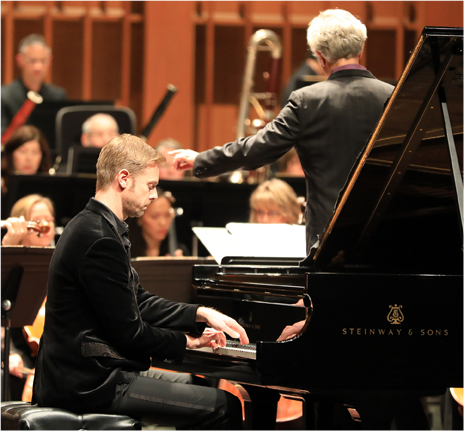
On Saturday, Music Director Jeffrey Kahane will take the first half of the concert to delve deeply into Beethoven’s Piano Concerto No. 4, with the orchestra on stage to illustrate his lecture. Following intermission, Kahane will lead the orchestra from the keyboard and perform as soloist in this landmark concerto.

Information: www.laco.org

There are several other Saturday evening concerts, as well, including:

Musica Angelica — one of the world’s premiere period-instrument ensembles — celebrates its 20th anniversary with performances of Handel’s Handel’s Music for the Royal Fireworks and a suite from Handel’s Water Music, and Telemann’s Concerto for Three Trumpets led by Music Director Martin Hasselböck. The concert is at 8 p.m. at the AT&T Center Theatre in downtown Los Angeles and at 3 p.m. Sunday at First Presbyterian Church, Santa Monica. Information: www.musicaangelica.org

The La Mirada Symphony plays the third free concert in its 50th anniversary season at the La Mirada Theatre for the Performing Arts as Music Director Robert Frelly conducts Wagner’s Prelude to Die Meistersinger, Dvorak’s Symphony No. 8, and Mozart’s Piano Concerto No. 21, with Teresa de Jong Pombo as soloist. Information: www.lamiradasymphony.com

Organist Meaghan King makes her Southern California recital debut in a free concert Saturday at 7:30 p.m. at Pasadena Presbyterian Church. King, the church’s assistant organist, will play music by J.S. Bach, César Franck, Franz Joseph Haydn, Olivier Messiaen and Charles-Marie Widor on the church’s massive Aeolian-Skinner pipe organ. Information: www.ppcmusic.org

The Los Angeles Philharmonic also plays Saturday night at Walt Disney Concert Hall but fortunately that’s just one of four opportunities to hear this week’s concert, which mark the return to L.A. of Gustavo after a four-month hiatus. He’ll be in town for a flurry of concerts during the next three weeks before he heads out again — this time with the Los Angeles Philharmonic in tow for a tour of London, Paris, Lucerne and New York City.

Dudamel’s latest sojourn begins Tuesday night when he leads The Colburn Orchestra in Disney Hall in a program of Revueltas’ Sensemayá, Tchaikovsky’s Symphony No. 5, and Copland’s Clarinet Concerto, with Colburn Conservatory student Sang Yoon Kim as soloist.

The program is noteworthy on several levels. First, since the concert is part of the Philharmonic’s “Sounds About L.A.” series (which presents student ensembles), tickets run from just $20.50 to $45. Second, Tchaikovsky’s fifth was the work with which Dudamel had his local debut, in 2005 at Hollywood Bowl.

Information: www.laphil.com

Dudamel returns to the L.A. Phil podium with concerts Thursday, Friday, Saturday and Sunday that feature Siegfried’s Death and Funeral Music from Wagner’s Götterdämerung, along with Schumann’s Symphony No. 3 (Rhenish) and Brahms’ Violin Concerto, with Gil Shaham as soloist. Information: www.laphil.com

The Feb. 28, March 1, 2 and 3 will showcase Debussy’s La Mer and the complete Firebird by Stravinsky. All except the “Casual Friday” concert on March 1 will open with the first LAPO performances of Zipangu by French-Canadian composer Claude Vivier. Information: www.laphil.com

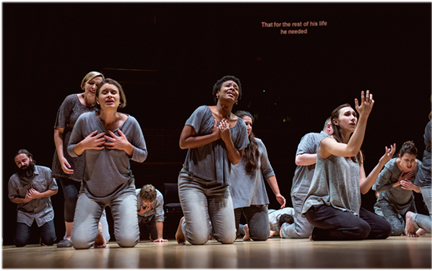
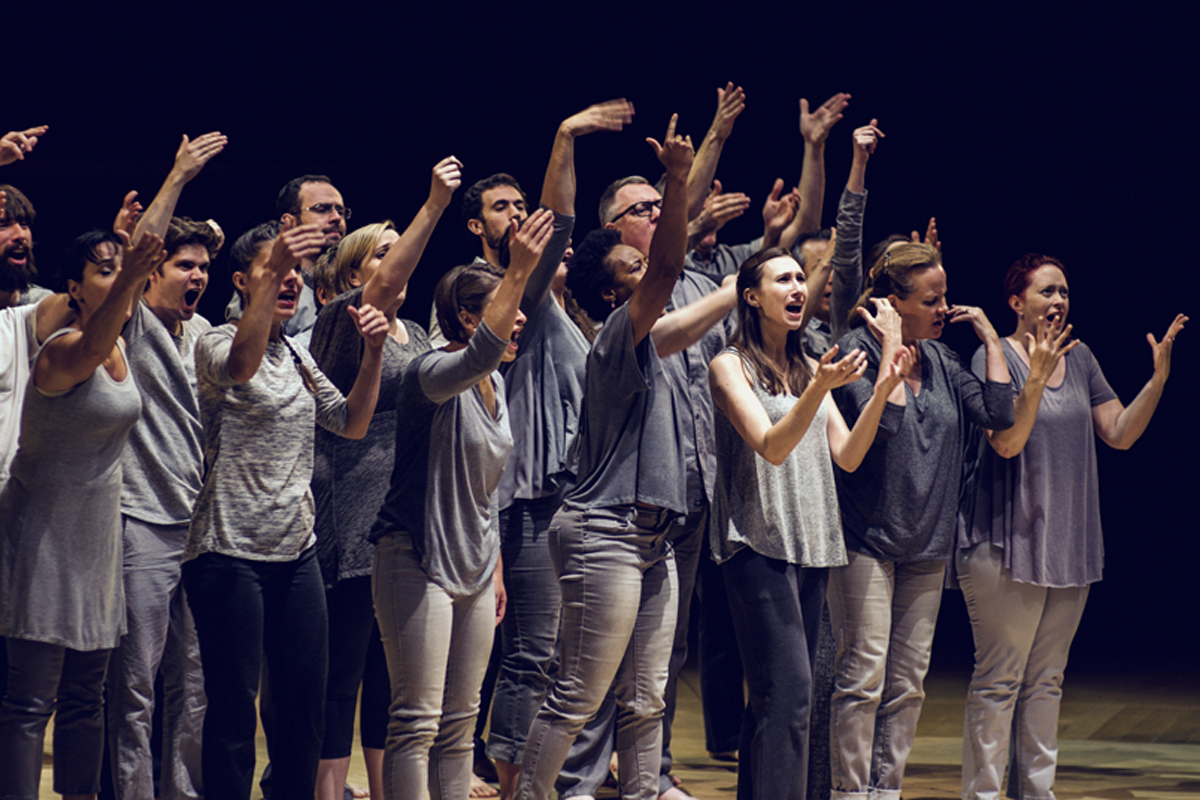
The whirlwind series of Dudamel concerts concludes March 7, 8 and 10 with the first staged performances of John Adams’ The Gospel According to the Other Mary, with Dudamel conducting the L.A. Phil, L.A. Master Chorale, six singers and three dancers.

When the oratorio version of this work premiered last spring, I called it “a very important work, stunningly performed by all forces.” (LINK) It was also nearly three hours long and Adams was, reportedly, very late in delivering the piece to the Phil and others. So part of the intrigue will be whether Adams has trimmed the work in any way and if — or how — Sellars’ staging contributes to the work’s overall impact.

Information: www.laphil.com
_______________________

(c) Copyright 2013, Robert D. Thomas. All rights reserved. Portions may be quoted with attribution.